Nuremberg: Vanderbilt’s Political Mirror

When I was a kid, I remember learning about a social experiment of sorts that was run in the 1960s. The basic premise was that a high school teacher named Ron Jones wanted to simulate what it would have been like to live during the German Third Reich. As such, he created a faux movement called “The Third Wave” to which he had students pledge their undying allegiance. The movement itself didn’t hold any particularly compelling beliefs, nor did it claim any special privileges for the students that joined it. What it did have was Ron Jones, a charismatic and authoritative leader. Under his direction, the movement grew to encompass most of the school within 5 days, creating fervent supporters who pledged their loyalty to a set of beliefs that even they were somewhat unclear on. The experiment reached a climax on the fifth day, when Jones held a rally reminiscent of those at Nuremberg, in which he revealed the true “inspiration” of this movement: the Nazi party.
The reason we learned about this social experiment was simple–it was the same reason that Ron Jones chose to run it–it teaches one simple lesson: anyone can be evil.
The new movie Nuremberg attempts to convey the same message, albeit through a more character and relationship-driven lens. The overall theme, though, remains the same: Nazi’s aren’t some abstract villain–they are real, and they are human.
Nuremberg takes a particularly interesting approach when conveying this message, choosing to focus less on Hitler and the movement as a whole and more on the psychology of a few men. It also differentiates itself in the fact that it doesn’t try to explain the psyche of these men or the reasons why they are Nazis, but instead, to first take them as Nazis and then show that they are merely men.
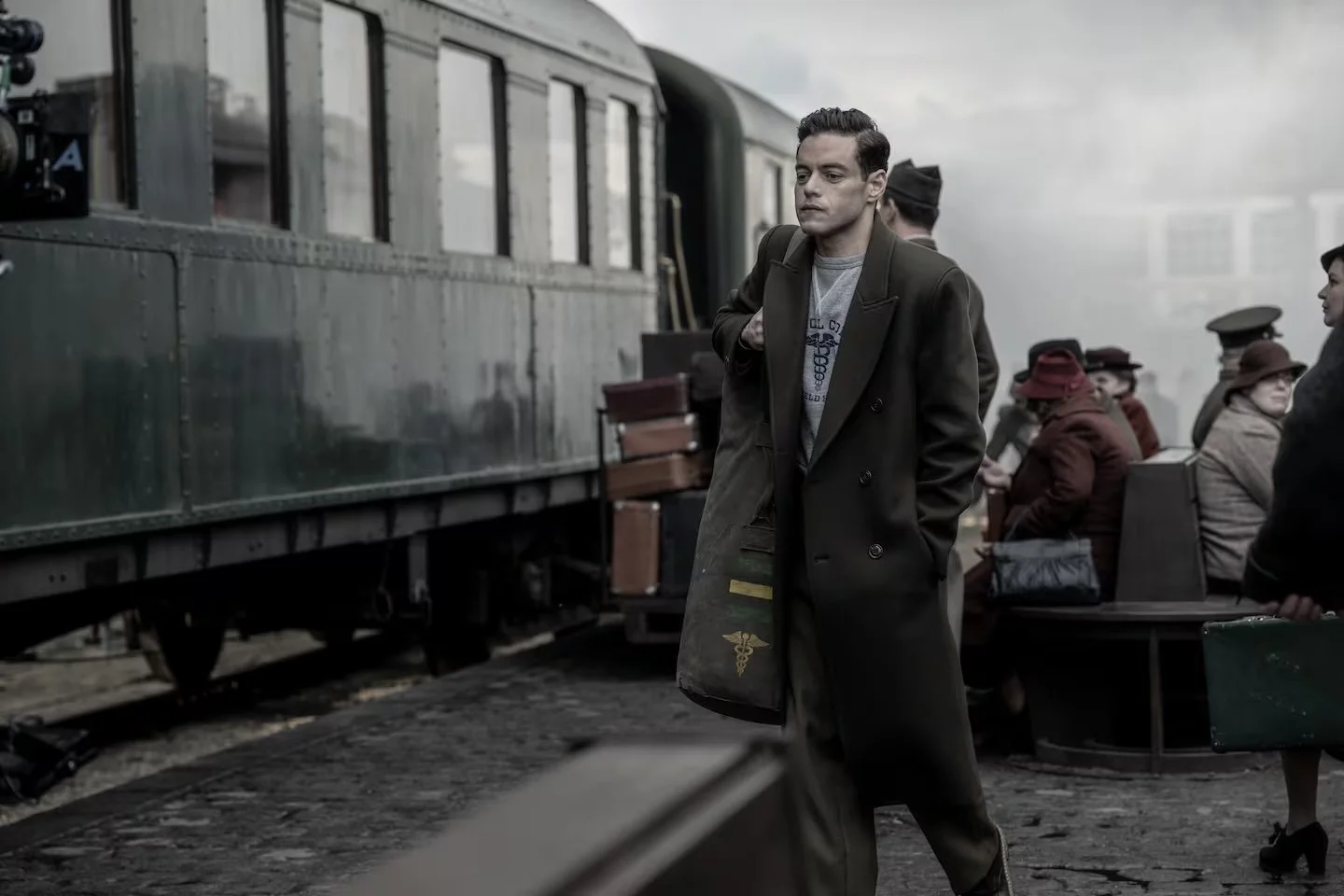
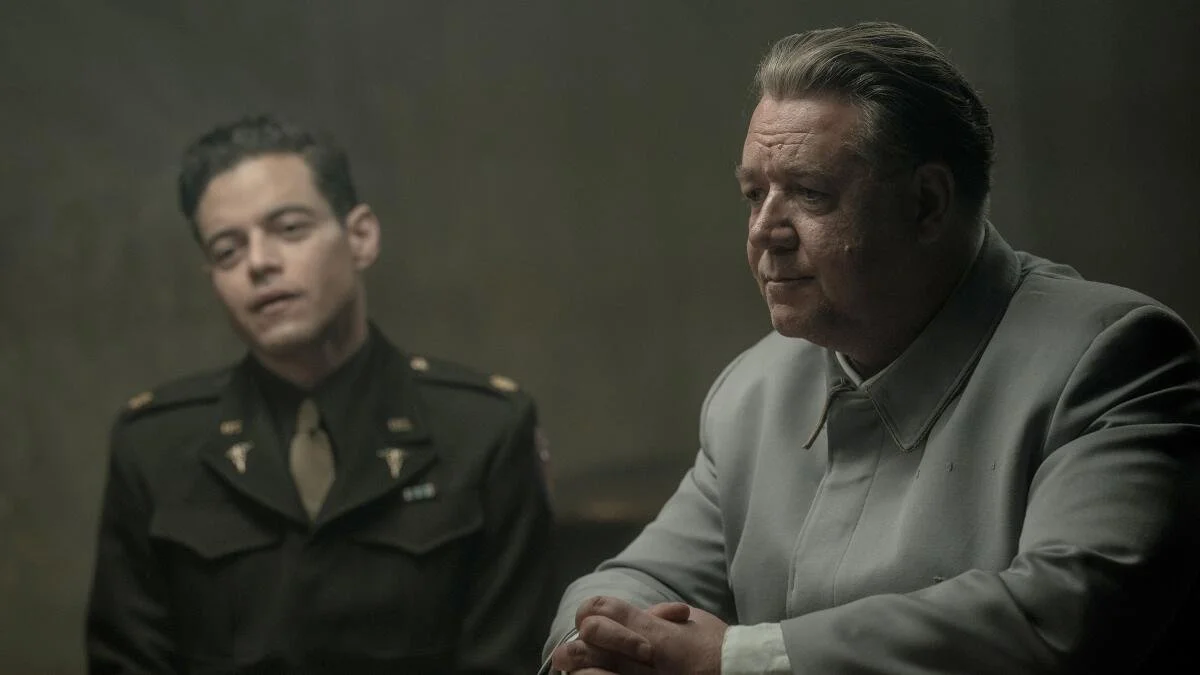
The movie starts where one would least expect a movie about Nazis to start: the end of WWII. In the first scene, we are presented with Hermann Göring, captured by a troupe of awestruck Allied soldiers. Though surrendering to the soldiers, Russell Crowe’s Göring maintains an air of composure and command. Despite not being the protagonist (that job is filled by Douglas Kelley (Rami Malek), a somewhat erratic army psychologist) Göring serves as the gravitational center of the story.
The overarching narrative is about the Nuremberg Trials and the psychologist who built a relationship with the Nazis being prosecuted. The story centers around the dynamic between Göring and Kelly, who develop a friendship of sorts. Göring starts off as a sort of larger-than-life figure but is humanized through his interactions with Kelly, subverting the audience's expectations of what evil truly looks like. Don’t get me wrong, he is portrayed as an egotistical narcissist. But he is also portrayed as a man who cares for his family, who desires deeply to serve his country, and who laughs and jokes and speaks calmly. The other Nazis are also humanized a great deal too, with several breaking down in tears at their sentencing or bursting out in fits of anger. Göring remains special, though, as his humanity is revealed layer by layer in the friendship he develops with Kelly.
And yet, as he gains more and more of his humanity, we are consistently reminded of the monster he is. In one of the most haunting moments of the film, real footage of the concentration camps is played for several minutes. Kelly, who—like the audience—has forgotten the actions behind the men on trial, is reminded of their atrocities and is forced to leave the courtroom, overcome by guilt and grief. Until that moment, both he and the audience had warmed up to Crowe’s charismatic portrayal of Göring. But in that moment, the juxtaposition between the atrocious actions he committed and the very real human he was forces the audience to acknowledge the fact that anyone has the capacity for evil–that Nazicism is born of man.
Beyond the powerful theme, the film is an absolutely compelling watch, with Crowe giving arguably one of his greatest performances. Malek, too, fits the role of Kelley well, starting out as somewhat of an eccentric psychologist and slowly devolving into an obsessed man. The tension in their relationship and the buildup of the trial never fails to hook the audience. And while there were a few lines of stilted dialogue and questionable directorial decisions (such as misplaced music during a few courtroom scenes and a rapid pace at the beginning), the film remains one of my favorites of the year.
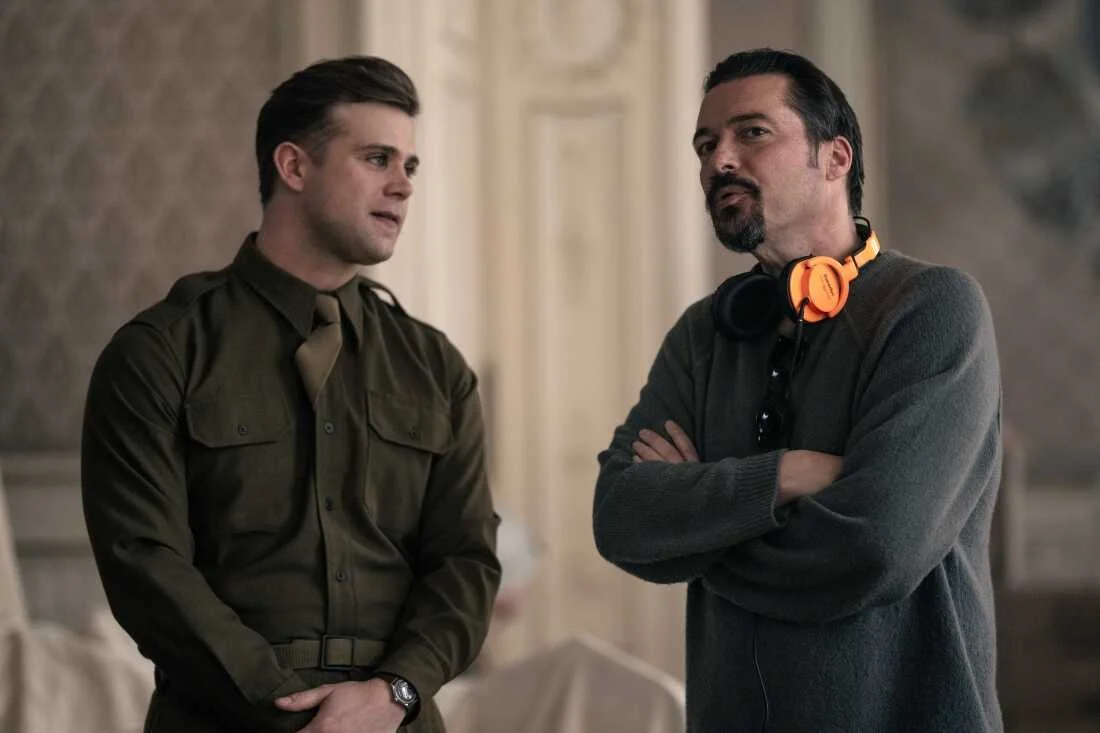
Given rising political tension across the world, writer and director James Vanderbilt’s political commentary is artfully articulated through the film. It’s a reminder that was needed in 1967 and a reminder that’s needed now–a message carried by Ron Jones for almost 50 years. Watching Nuremberg today feels less like looking into history and more like looking into a mirror. The faces change, the uniforms change, but the psychology doesn’t. Evil is never some external force, but a conscious decision made by men. And that is what makes Nuremberg so powerful—it reminds us that we aren’t free of this danger, and that the next wave can always rise again.
Popular Reviews