Mr. Sorkin Goes Back to Silicon Valley: Why The Social Reckoning Falls Short
It’s 2026. The AI arms race is fully underway, and all the major tech players are rolling out new and better generative products. You hear that Aaron Sorkin, the Academy-trophied Tiresias who wrote The Social Network, has penned (and directed) a sequel of sorts that continues the Facebook story.
Then you find out it’s about The Facebook Files, what turned out to be an explosive but less-than-apocalyptic episode in the company’s history, and something within you deflates.
No one reading this has to imagine that scenario, because it is, of course, what happened. The Social Reckoning has just hit theaters—and it’s a colossal misfire.
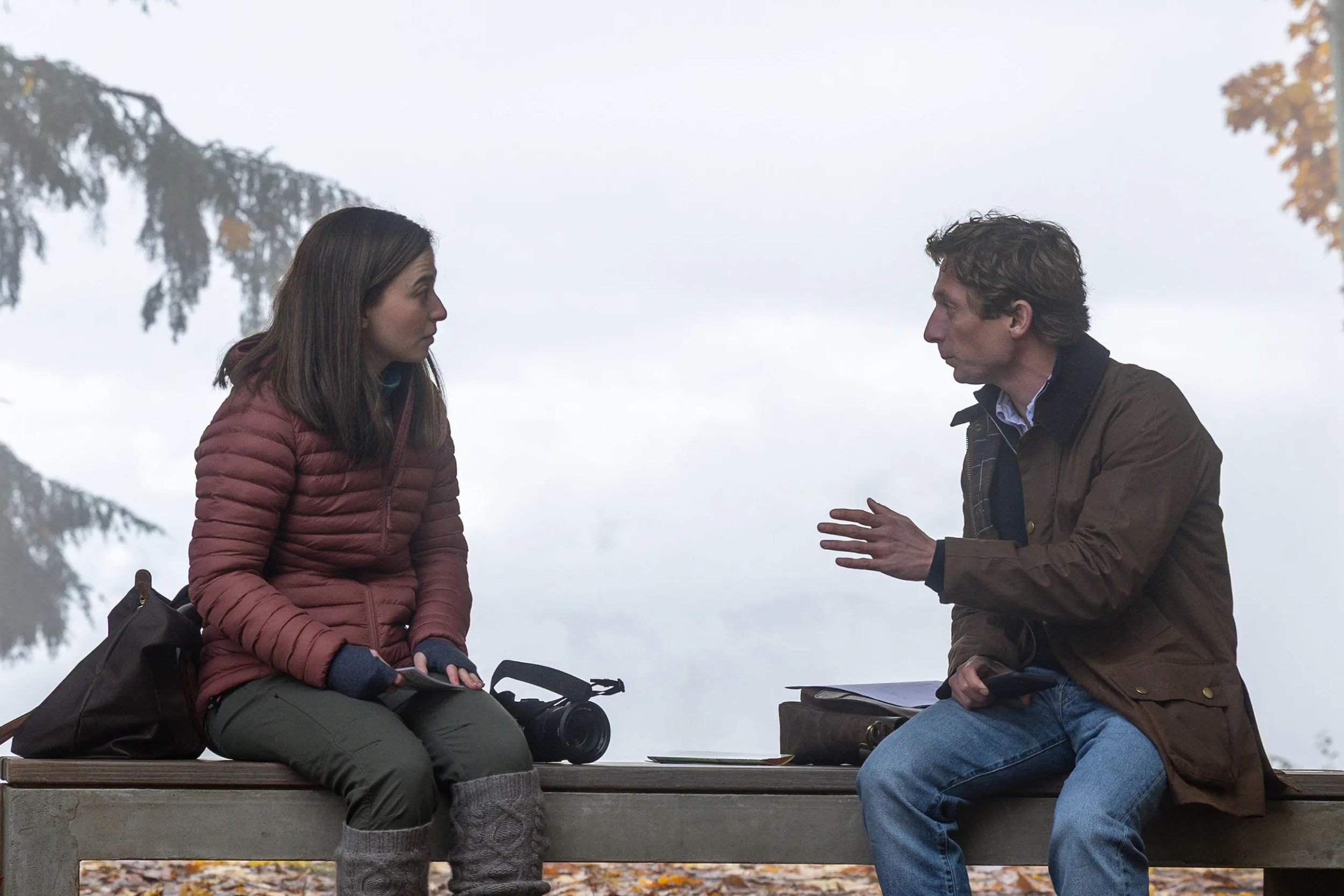
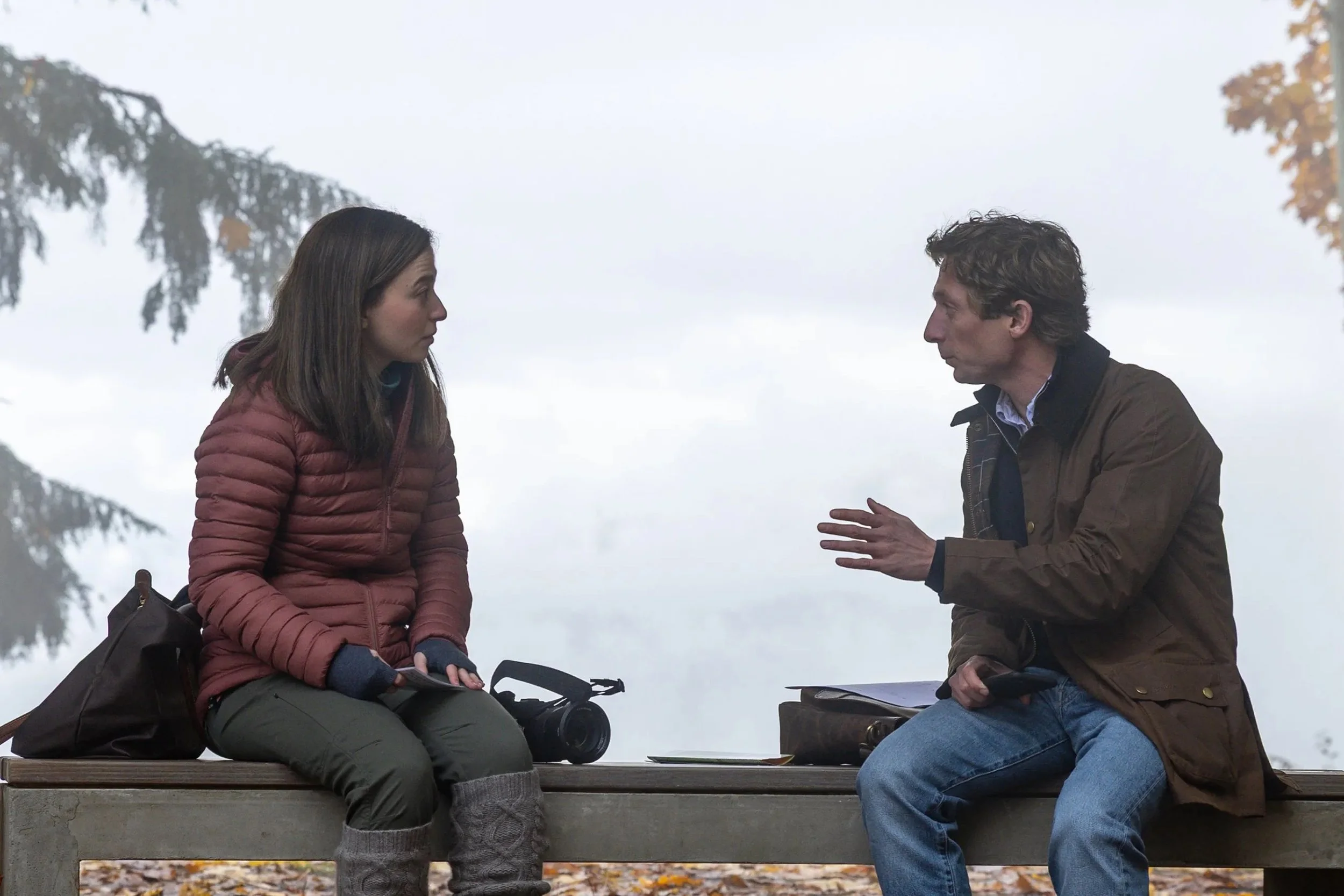
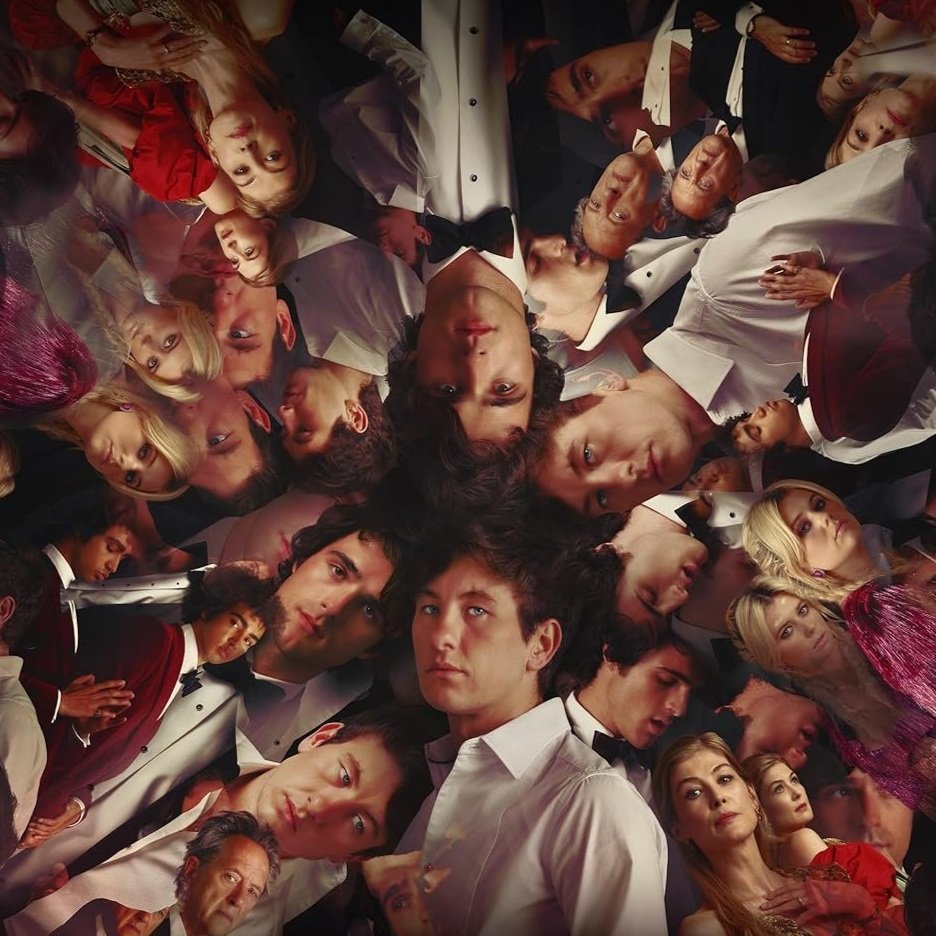
The film dramatizes a major leak released by Frances Haugen (Mikey Madison) and reported by Wall Street Journal investigative reporter Jeff Horwitz (Jeremy Allen White) which exposed Facebook (turned Meta) to scrutiny over teen safety online and the spread of misinformation. Sorkin chooses to focus largely on the latter. His chief concern is online radicalization—which is made clear by the opening scene in which a privileged white woman berates a pair of police officers. It’s the kind of broad, idiot-proof commentary that would be lampooned if deployed in any other film but goes mostly unexamined—until that same character is shown to be among the January 6 rioters in an absurd reveal.
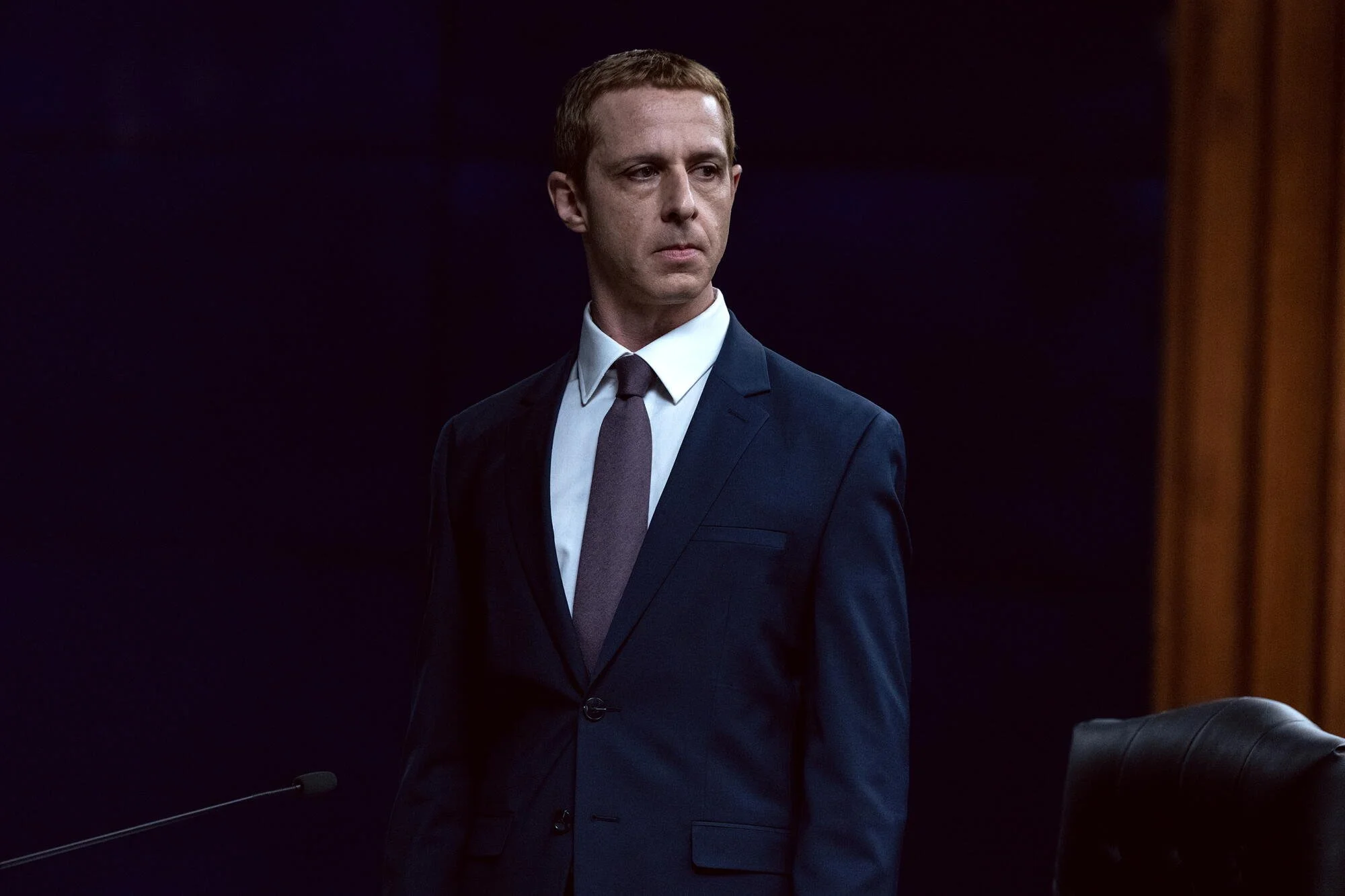
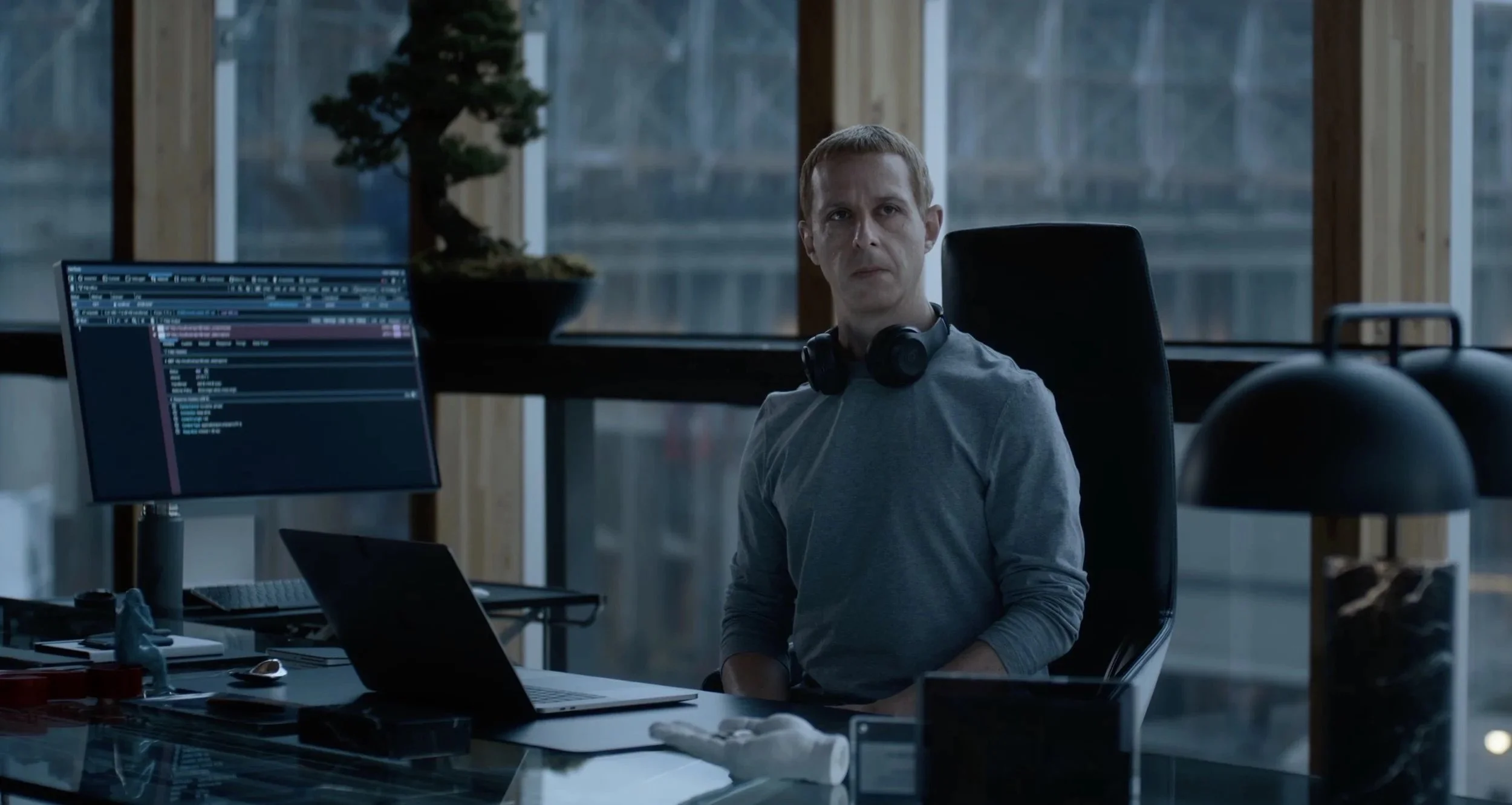
The most visible connection between this new film and its predecessor is the character of Mark Zuckerberg, CEO of Facebook. Jesse Eisenberg, who was much lauded for his performance in the original, declined to return, and Jeremy Strong was selected instead. Strong’s performance is stagey and rather mannered; he rarely dips into the fast-talking, icy tirades so characteristic of Sorkin’s Zuckerberg. Instead, he leans robotic and one-noted, which is perhaps a more authentic portrayal—though knowing Strong’s virtuosic ability in playing neurotic, single-minded characters, I was disappointed Sorkin gave him so little to work with. The part is ultimately quite superfluous: Strong does not share a spoken scene with either of the leads, nor does he actively move the story forward. His only moment of real agency comes near the end and pays off more in a thematic sense (that is, still lacking a causal narrative effect).
On its own terms, The Social Reckoning stumbles in two fundamental areas: First, many technical elements of the moviemaking craft continue to elude Sorkin as a director, and secondly—and more damningly—the film never produces a compelling argument for its own relevance, a dire condition for a film so closely tied to The Social Network, one of the most effortlessly prescient films in recent memory.
To the first point, the occasionally non-linear structure feels artificially imposed. Where The Social Network was propelled by its nontraditional plot progression, Reckoning jolts back and forth and often obfuscates its narrative threads before cauterizing them. Even Sorkin’s famous witticisms have eroded. There comes a crucial moment in the Wall Street Journal office in San Francisco when the editor asks the male reporters to leave the room so that she may talk to Haugen one-on-one, a conversation which we do not get to see. I couldn’t discern if Sorkin’s choice not to depict this was a moment of self-reflective gender commentary or because he was not confident in his abilities to write a scene between two women. I’m skeptical of the former explanation when considering that one of the only memorable quips in the film is a barb about “mansplaining.”
Moreover, the editing is flabby, even at 112 minutes. Unlike the precise, perfectly pre-lapped edit of the original, Sorkin and editor Alan Baumgarten let pauses torpedo some of the better banter—which is further hobbled by the shot-reverse-shot dialogue regime that very rarely introduces creative coverage. Almost every subject is center framed in medium shots; gone are the elegant tracking moves and intimate close-ups of The Social Network. The only moment when the directorial style shifts is during the January 6 recreation, in which the film predictably pivots to handheld photography.

At a level deeper than craft, that particular moment—which is intercut with Haugen’s congressional testimony in the film’s climax—is the biggest miscalculation. Sorkin’s impulse to show January 6 with its deserved brutality is admirable, but I am reminded of the long period in which American films refused to depict the September 11 attacks. If they figured into the story, it was almost always accomplished with authentic news footage. There is something tasteless or even irresponsible about depicting an attempted insurrection in such a literal, boots-on-the-ground manner—and to position it alongside a triumphant moment for our heroes in Haugen’s testimony. It is a purposeless recreation, unless the goal was to educate. And this of course betrays Sorkin’s naivete—for who would honestly expect those who deny the severity of January 6 to be swayed by this overtly liberal and profoundly middle-brow film?
This accentuates the film’s struggle with relevance. Sorkin’s optimism here occasionally appears like self-satire. On a Puerto Rican beach, Madison’s Haugen exclaims, “I’m not a Frank Capra character!” Except, in a way she is. It’s probably an intentional irony because Sorkin’s dogged support of institutions certainly recalls that earlier director. Only, we don’t live in the world of Mr. Smith Goes to Washington. We can no longer be reminded of common decency by an unassuming man with a suit and a briefcase. Testifying before Congress is not a glorious moral victory. I don’t mean to imply that Sorkin doesn’t know this, but he chooses to ignore it in this film.
Reckoning offers the perfect opportunity to tell a contemporary story—and more specifically, an authentically cynical one. One which at least acknowledges that the liberal values this nation was built on have been wounded. That most young people no longer believe they can make a difference. But instead, Sorkin charges undeterred into the same, well-trodden territory he has staked before. And without the historical distance of something like The Trial of the Chicago 7, his portrait of change-making in America appears naked and almost grotesque in its simplicity.

Sorkin’s attitude emphasizes the gulf between this new film and The Social Network. Reckoning feels like an autopsy; it relitigates a minor moment of triumph for investigative journalism, without acknowledging that journalistic integrity is under threat everywhere. Did The Facebook Files leak sharply curtail misinformation on social media? Having done no empirical research myself, I won’t take an authoritative position, but from my anecdotal experience I am rather confident that it did not.
There’s a secondary irony that many theater chains in the United States are playing the trailer for Artificial, the film about the rise of OpenAI from Luca Guadagnino and Neon (after it was dumped by Amazon), before this movie. Artificial seems like the more worthy successor to The Social Network—and not simply because of the overlapping cast member in Andrew Garfield. Rather, Artificial appears to be relevant in the ways that The Social Reckoning is not. It focuses on the changing hierarchy of the tech world that increasingly rules our lives; Reckoning focuses on the slow wheels of traditional power that feel distant and even innocuous in the face of such an existential threat.
It’s not that The Social Reckoning should not have been made. With Sorkin’s considerable talent, I have no doubt that a version of this exact material could have been incisive and vividly contemporary. But the screenwriter who once saw the future has found himself tangled in the augur’s entrails and now passes off the past as prophecy.
Popular Reviews